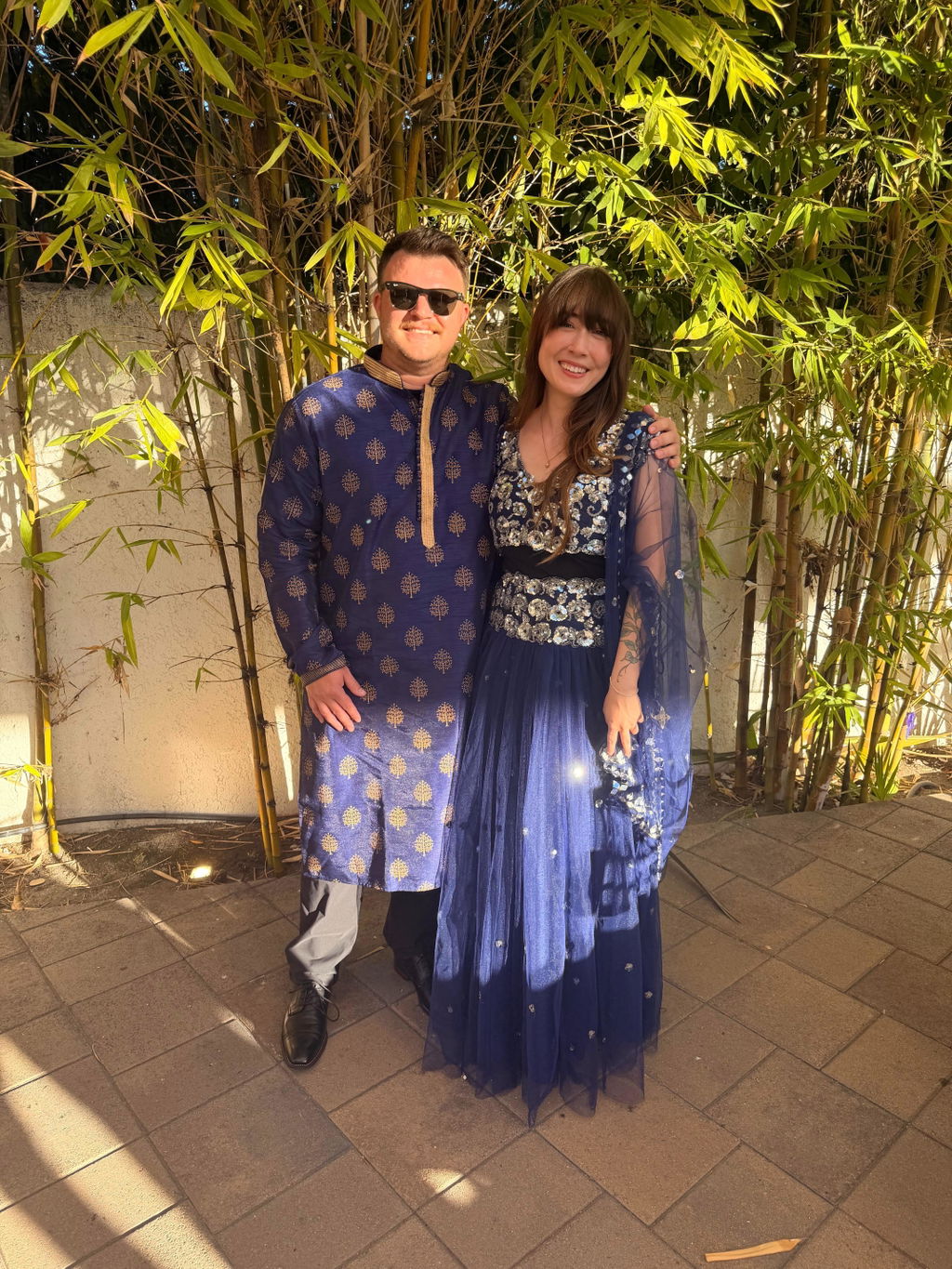
8 Types of Salwar Suits: The Ultimate Style Guide

Not all Indian suits are created equal - and sometimes, the pants make all the difference!
If you've ever shopped for an Indian wedding outfit and wondered about the difference between a sharara, palazzo, churidar, and traditional salwar suit, you're not alone.
With so many beautiful styles, silhouettes, and names, navigating Indian fashion can feel overwhelming, especially if you're attending your first Indian wedding. The good news? We've got you covered!
From elegant straight pant suits to dramatic shararas and flowing Anarkalis, we're breaking down eight popular Indian suit styles, how to recognize them, and which occasions they're best suited for.
First: What Is a Salwar Suit?
A salwar suit, also known as a salwar kameez, is a traditional South Asian outfit typically consisting of three pieces:
-
Kameez: The tunic or top, which can be short, knee-length, or longer.
-
Salwar: The pants worn underneath, traditionally loose through the hips and thighs and tapered toward the ankles.
-
Dupatta: A matching scarf or shawl, often draped over the shoulders.
Over time, this classic silhouette has evolved into countless variations, incorporating everything from fitted cigarette pants to dramatic, flowing shararas.
Today, the term salwar suit is often used broadly to describe Indian outfits featuring a tunic and pants, even when the bottoms aren't technically traditional salwars.
So... is a Salwar Suit the Same as an Indian Pant Suit?
If you're more familiar with Western fashion terminology, think of a salwar suit as an Indian pant suit.
In Western shopping contexts, these outfits are sometimes called "pant suits" because they consist of a coordinated top and pants. However, unlike a traditional Western pantsuit featuring a blazer and trousers, an Indian pant suit typically includes an embroidered tunic (kameez), coordinating pants, and often a dupatta.
You'll also come across terms like straight pant suit, palazzo suit, and sharara suit, which describe the different pant silhouettes.
So whether you're searching for an Indian pant suit, salwar kameez, or salwar suit, you're exploring variations of this beautiful category of South Asian fashion.
Quick Guide: Comparing the Different Types of Salwar Suits

Suit Style |
Pant Silhouette |
Overall Look |
|---|---|---|
| Traditional Salwar | Loose at hips, tapered ankles | Classic and comfortable |
| Straight Pant | Straight from thigh to ankle | Clean and elegant |
| Cigarette Pant | Slim and tailored | Modern and polished |
| Churidar | Very fitted with ankle folds | Traditional and refined |
| Palazzo | Wide from hips | Flowy and relaxed |
| Sharara | Dramatically flared | Festive and glamorous |
| Gharara | Fitted to knee, then flared | Regal and traditional |
| Anarkali | Varies; defined by flared tunic | Romantic and graceful |
Now, let's dive into the different styles!
1. Traditional Salwar Suit
The original classic.
The traditional salwar suit features a long or knee-length kameez paired with loose, gathered pants that taper toward the ankles.
Unlike straight pants or palazzos, traditional salwars have a relaxed, billowy shape around the hips and thighs, creating a distinctive silhouette.

This style is especially associated with Punjabi fashion, although variations are worn throughout South Asia.
How to recognize it: Loose, gathered fabric around the hips and thighs that narrows at the ankles.
Best for: Mehndi celebrations, daytime festivities, cultural gatherings, and comfortable everyday elegance.
From All Borrow: The Saffron Cape Salwar Suit is a beautiful example of this classic silhouette, featuring an olive-green embroidered kurta and matching straight-leg pants.
2. Straight Pant Suit
Simple, sophisticated, and effortlessly polished.
A straight pant suit features a straight-cut kurta paired with pants that maintain a relatively consistent width from the thigh to the ankle. The silhouette is structured without being overly fitted, making it one of the most versatile Indian suit styles.

Straight pant suits can be minimal and understated or elaborately embroidered for formal occasions.
How to recognize it: Straight-leg pants without dramatic flaring, tapering, or gathering at the ankles.
Best for: Wedding ceremonies, daytime events, engagement parties, and semi-formal celebrations.
From All Borrow: The Ivy Straight Pant Suit is a beautiful example of this classic silhouette, featuring an olive-green embroidered kurta and matching straight-leg pants.
3. Cigarette Pant Suit
Tailored, modern, and a little more fitted.
Cigarette pant suits are similar to straight pant suits, but the pants have a slimmer, more tailored fit. They generally sit close to the legs without being skin-tight and often finish at or just above the ankles. The result is a sleek, contemporary silhouette that pairs beautifully with both short and long kurtas.
How to recognize it: Slim, tailored pants that narrow slightly toward the ankles without bunching.
Best for: Engagement parties, cocktail-style celebrations, intimate weddings, and contemporary festive occasions.
4. Churidar Suit
Fitted, traditional, and beautifully timeless.
A churidar suit features a kameez paired with narrow, fitted pants that extend beyond the ankle and gather into distinctive folds. The word churidar refers to the bangle-like folds created by the extra fabric around the ankles. Churidars are often worn with longer kurtas and Anarkali-style tops, creating a graceful and elongated silhouette.

How to recognize it: Very fitted pants with noticeable fabric gathering around the ankles.
Best for: Traditional wedding ceremonies, religious celebrations, festive gatherings, and formal occasions.
From All Borrow: The Baby Blue Anarkali features a flowing baby blue Anarkali adorned with shimmering crystals, delicate pink and metallic embroidery, and matching silk pants that remain mostly hidden beneath the flowing fabric, creating a graceful, elongated look.
5. Palazzo Suit
Flowy, flattering, and made for celebrating.
Palazzo suits feature a kurta or crop top paired with wide-leg pants that fall loosely from the hips. Unlike shararas, which typically have a more pronounced flare, palazzo pants generally maintain a wide, flowing silhouette throughout the leg. Their relaxed fit makes them particularly comfortable for long wedding celebrations, dancing, and warm-weather events.
Palazzo suits come in a variety of styles, from traditional embroidered kurtas to modern crop tops with sheer capes.

How to recognize it: Wide-leg pants that flow from the waist or hips without a distinct knee flare.
Best for: Sangeets, mehndi parties, wedding receptions, and festive celebrations.
From All Borrow: The Rosemary Palazzo Set offers a modern take on this silhouette, featuring shimmering sea-green fabric, a beautifully embroidered crop top, and a sheer flared cape layer.
For a more traditional look, explore the Poppy, Limoncello, and Petal Palazzo Suits.
6. Sharara Suit
For when a little drama is exactly what the occasion calls for.
A sharara suit features a kurta paired with dramatically flared pants, creating a voluminous, skirt-like appearance. Traditional shararas often begin relatively fitted or gently shaped through the upper leg before widening into a dramatic flare. Modern designs can vary in where that flare begins.
The result is an elegant, statement-making silhouette that combines the movement of a lehenga with the convenience of pants.

Sharara suits are especially popular for Indian weddings because they offer a festive, dressed-up look without requiring a full skirt.
How to recognize it: Separate pant legs with dramatic volume and a pronounced flare, creating a skirt-like effect.
Best for: Sangeets, wedding receptions, engagement parties, and formal festive celebrations.
From All Borrow: The River and Roselle suits feature beautifully embroidered kurtas paired with flowing, flared bottoms.
7. Gharara Suit
Vintage royalty with a dramatic twist.
Gharara suits are often confused with sharara suits, but there's one important difference: the knee seam.Traditional gharara pants are fitted from the waist to the knees, where a separate, dramatically flared section of fabric is attached. This creates a distinctive silhouette with a clearly defined transition at the knee.
Ghararas have a rich history in South Asian formalwear, particularly in North Indian and Pakistani fashion, and remain a beautiful choice for weddings.
How to recognize it: Fitted upper legs with a visible seam or joint at the knee, followed by a dramatic flare.
Best for: Wedding receptions, formal ceremonies, traditional celebrations, and occasions calling for a regal look.
8. Anarkali Suit
The dress-like silhouette that never goes out of style.
An Anarkali suit is a little different from the other styles on this list. Rather than being defined by the pants, an Anarkali is recognized by its long, fitted bodice and flowing, flared tunic that resembles a dress.

Anarkali suits are traditionally paired with churidar pants, although modern versions may feature straight-leg trousers or other bottoms. Unlike the other styles in this guide, the Anarkali is defined by the shape of its tunic rather than its pants.
How to recognize it: A fitted bodice that opens into a long, flowing, dress-like skirt.
Best for: Wedding ceremonies, receptions, engagement parties, and elegant evening celebrations.
Frequently Asked Questions About Salwar Suits
Can you wear a salwar suit to an Indian wedding?
Absolutely! Salwar suits are a beautiful alternative to lehengas and sarees for Indian wedding guests. Depending on the embroidery, fabric, and overall design, they can be appropriate for everything from daytime mehndi celebrations to formal evening receptions. Always check the couple's dress code for specific guidance.
Do you have to wear all three pieces of a salwar suit?
Not necessarily! While traditional salwar suits often include a kameez, matching pants, and a dupatta, you can adapt the styling to your preferences. Some outfits look beautiful without the dupatta, while others can be paired with accessories for a more contemporary look. If renting, be sure to return every piece included in the original set.
Can you wear your own pants with a rented salwar suit?
Yes! If the kameez fits beautifully but you prefer a different pant silhouette, you can pair it with trousers from your own wardrobe. Just choose a complementary color and fabric, and remember to return the original matching pants with your rental.
What shoes should you wear with a salwar suit?
It depends on the occasion and the length of your outfit. Embellished sandals, block heels, and traditional juttis are all popular choices. For longer Anarkalis and flowing sharara suits, heels can help create an elongated silhouette, while flats are a comfortable option for daytime celebrations.
Should you rent or buy an Indian suit?
Renting is a great option if you're attending multiple wedding celebrations, want to experiment with different silhouettes, or don't anticipate wearing the same outfit frequently.
At All Borrow, you can explore embroidered straight pant suits, palazzo sets, sharara suits, and more without committing to purchasing each outfit. Flexible rental durations make it easier to plan for different wedding events.
How far in advance should you rent a salwar suit?
It's best to reserve your outfit as soon as your event dates are confirmed, especially during peak wedding season. Popular designs and sizes may have limited availability, so booking early gives you more options.
All Borrow offers different rental durations and free 2-day shipping to the U.S. and Canada on eligible orders.
Find Your Perfect Indian Suit at All Borrow
From classic straight pant suits to flowing palazzos and statement-making shararas, there's an Indian suit style for every celebration. Whether you're attending your first Indian wedding or looking to try a new silhouette, understanding the different styles makes finding your perfect outfit that much easier.
Ready to find your look? Explore All Borrow's Salwar Suit and Anarkali Collection to discover beautiful styles available to rent, with free 2-day shipping to the U.S. and Canada on eligible orders.